
The least Italian city in Italy is also the world capital of the 'expresso'
The least Italian city in Italy is also the world capital of the 'expresso'
Located in the northeast of Italy, in the Friuli- Venezia Giulia region, Trieste is a city that fuses history, culture, gastronomy and impressive landscapes . Often overlooked on conventional tourist routes, this Italian gem has a charm of its own, capable of conquering any traveler looking for authenticity, tranquility and beauty.Trieste is a city with a fascinating history that has been shaped by its strategic position on the border between Western and Eastern Europe. From Roman times to the Austro-Hungarian Empire, it has been a melting pot of cultures. This past has left deep marks on the architecture, customs and character of the place.
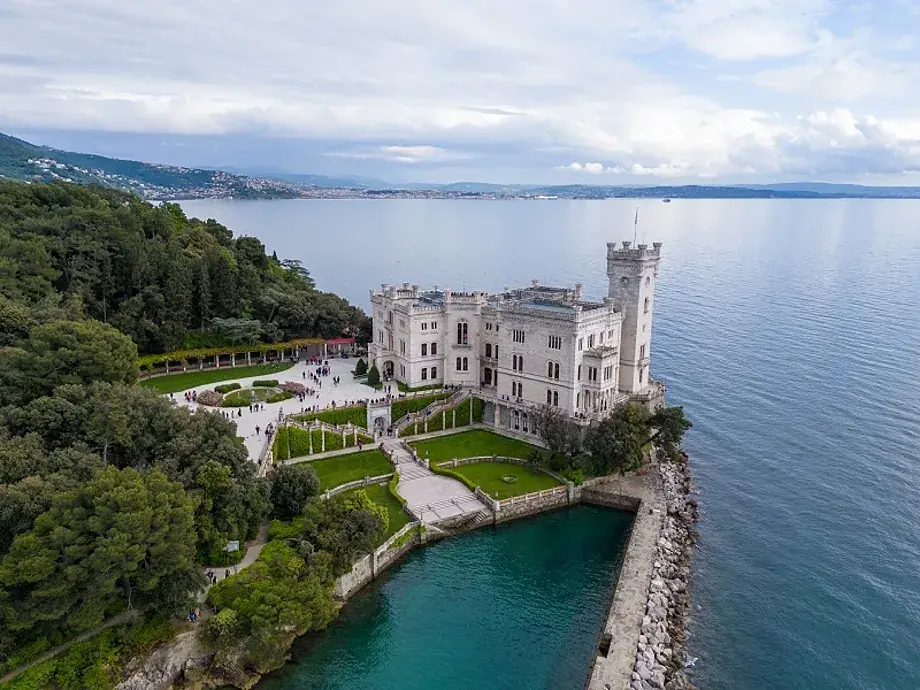
One of the most important historical emblems is the Miramare Castle , a majestic neo-Gothic construction dating from the 19th century. Located on the shores of the Adriatic, it was the home of Archduke Ferdinand Maximilian of Habsburg and his wife, Charlotte of Belgium. Today, it is a museum that allows visitors to tour its elegant rooms and enjoy the lush gardens with sea views. For history lovers, there is also the Roman Theater , an ancient amphitheater from the 1st century AD, testimony to the city's glorious past.
But Trieste is not just a compendium of monumental buildings; It is a cultural crossroads. In its streets, traces of Austro-Hungarian domination coexist with Italian and Slovenian touches, creating an eclectic mix of traditions, languages and architectural styles . Its location facing the Adriatic Sea and surrounded by hills makes it an idyllic setting for travelers seeking spectacular views. Italy 's Unity Square is the heart of the city, and the largest square in Europe that faces directly the sea. Surrounded by neoclassical buildings, it is the ideal place to sit on a terrace, enjoy a coffee and contemplate the grandeur of this Italian corner.
For panoramic lovers, the Faro della Vittoria offers stunning views of the city and the sea. Climbing this historic lighthouse, erected in memory of sailors who died in World War I, rewards you with a view that stretches from the Julian Alps to the Dalmatian coast. Another place that you cannot miss is the Hill of San Giusto, where the homonymous cathedral and its medieval castle stand.
The feast of Triestine flavors
A visit to Trieste would not be complete without immersing yourself in its delicious cuisine, which is as diverse as its history. Triestine cuisine mixes Italian, Slovenian and Austrian influences , creating a unique culinary offer that will delight the most demanding palates.One of the most emblematic dishes is jota, a traditional soup of beans, fermented cabbage (sauerkraut) and bacon, perfect for cold days. Also typical is goulash , a Hungarian-style meat stew that has been adapted to local tastes. Fresh seafood is a delight at the harborside restaurants. Other ideal dishes are mussels, squid or sardines 'in saor' , a Venetian recipe that takes on a life of its own in Trieste.
This metropolis is also famous for its coffee tradition . In the past, it was one of the main ports of entry for this drink in Europe. This is reflected in its fascinating culture about it. Not in vain, it is known as the espresso capital of the world . A must-do plan is to visit one of its historic cafes, such as Caffè San Marco or Caffè degli Specchi , where literary figures such as James Joyce and Italo Svevo used to spend time. Here, coffee is served in a thousand different ways, from the typical espresso to the more peculiar capo in B (coffee with milk in a small glass).
For those with a sweet tooth, desserts are an inevitable temptation. The most recognized are the Presnitz , a cake filled with dried fruits, nuts and spices, or the Strucolo de pomi , a type of Triestine strudel that reflects the Austrian influence.